Most organizations do not realize they need a disaster recovery strategy until the moment they desperately need one. By then, the damage is already done.
If your core systems went offline right now, what would happen over the next few hours?
For many UAE businesses, the answer is uncomfortable. Operations slow down. Teams scramble to respond. Customer communication gets disrupted. And somewhere in the background, a very expensive clock starts ticking.
Disaster recovery is often treated as a secondary IT concern — until it suddenly becomes the most important issue in the business.
The cost of a disaster recovery strategy is predictable and manageable. The cost of not having one is neither.
Below are the five risks we see most consistently when assessing UAE business environments.
- Unplanned Downtime That Compounds by the Hour
Downtime is never just an IT problem.
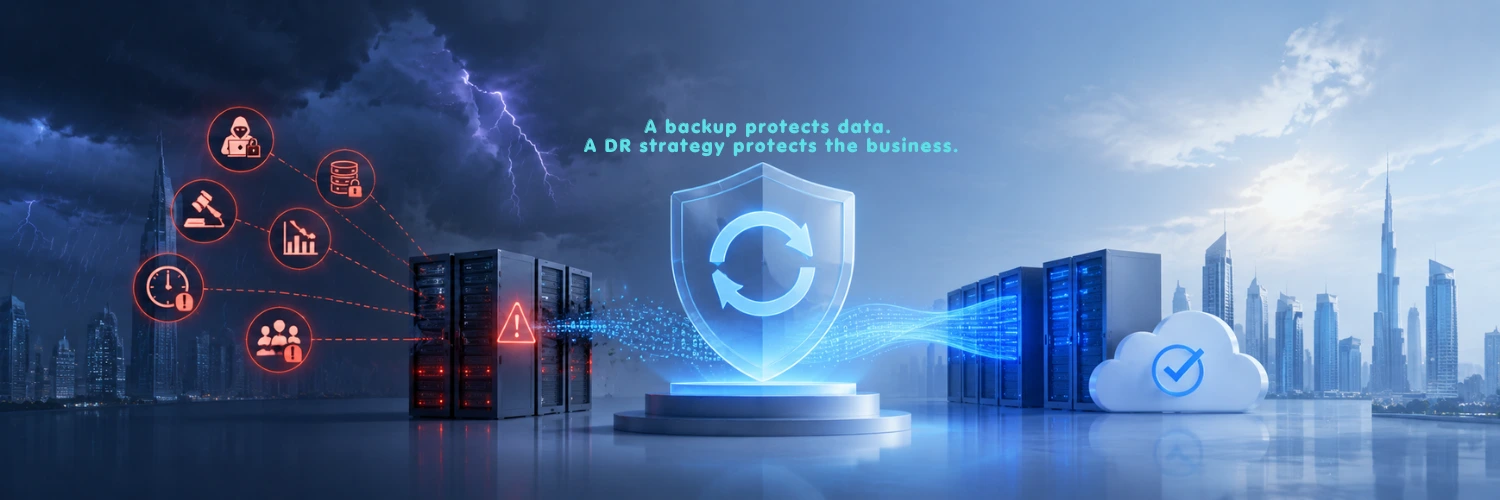
Every hour systems remain unavailable impacts productivity, customer experience, internal operations, and revenue generation. Without a structured recovery strategy, businesses can spend days trying to restore critical systems after an outage.
For organizations relying heavily on digital infrastructure, even short disruptions can create long-term operational setbacks. This is why many businesses are investing in enterprise disaster recovery solutions in the UAE for faster recovery and business continuity.
- Ransomware with No Reliable Recovery Path
Modern ransomware attacks do more than encrypt files. Many actively target connected backups and recovery systems before triggering the attack.
Without properly secured cloud backup and DR solutions UAE businesses may find themselves with no clean recovery option available.
The consequences can include:
- Permanent data loss
- Extended downtime
- Financial losses
- Reputational damage
A reliable DR strategy helps organizations maintain isolated and recoverable backup environments designed to reduce recovery time during cyber incidents.
- Compliance and Regulatory Risks
Across industries such as healthcare, finance, education, and government, businesses are expected to maintain strong data protection and continuity practices.
Organizations without tested DR procedures may face regulatory scrutiny, audit challenges, compliance risks, and increased operational exposure.
This is why many businesses seek disaster recovery consultation UAE providers offer to assess vulnerabilities, improve preparedness, and strengthen recovery planning before incidents occur.
- Reputational Damage That Lasts Beyond the Outage
Systems come back online. Reputations take longer to recover.
A prolonged outage — especially one that affects customer data or service delivery — can damage customer trust long after the technical issue is resolved.
Working with managed disaster recovery services in the UAE means businesses have tested recovery procedures already in place — not internal teams responding to a crisis for the first time under pressure.
When incidents occur, preparation makes a measurable difference.
- Outdated or Untested Backups
Many businesses assume backups alone are enough — until they attempt a real recovery.
In many cases, backups are outdated, recovery procedures are untested, critical applications are missing, and restoration takes far longer than expected.
A backup that has never been restored is not a recovery strategy. It is an assumption.
Without regular testing and recovery validation, businesses may discover major gaps only during a live incident.
Building a Stronger Recovery Strategy
The best disaster recovery provider in the UAE does more than offer backup tools. They build recovery strategies around your business, operational priorities, compliance needs, and recovery timelines.
At Byezzy Tech, we start with a thorough assessment to identify recovery gaps, evaluate risks, and implement DR strategies designed for real-world disruptions.
Whether you need disaster recovery consultation that UAE businesses rely on, managed recovery services, or cloud backup and DR solutions that UAE organizations can trust, Byezzy Tech helps businesses recover faster and operate with greater resilience.
Because when disruption happens, the only question that matters is how quickly your business can recover.